
Notifications
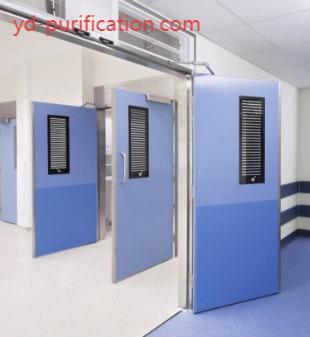
Cleanroom environments demand precision, and Cleanroom Doors have become an essential part of maintaining controlled conditions across production, research, and healthcare facilities. Professionals working with yd-purification often focus on airflow stability, containment efficiency, and long-term operational reliability when selecting entry systems. As clean technologies evolve, how can these solutions continue to support high-performance environments?
Controlled spaces rely on a carefully balanced ecosystem. Air filtration, structural design, and movement control all shape the internal atmosphere. Entry systems, often overlooked, carry significant responsibility in maintaining this balance. Their structural density helps stabilize pressure zones, while their surface composition supports strict hygiene requirements. A well-designed entry system reduces disturbance during transitions and helps protect sensitive processes from unpredictable variables.
Across manufacturing and scientific fields, operational stability remains a primary concern. Production lines that handle micro-scale components or sensitive compounds depend on precision throughout the workflow. Entry systems contribute to this stability by limiting unnecessary airflow shifts and supporting controlled circulation patterns. Their smooth operation helps minimize interruptions, maintaining facility rhythm and keeping contamination risks within targeted limits.
As global industries expand, clean facilities face new demands. Advanced materials, updated process requirements, and evolving regulatory frameworks shape the expectations placed on critical infrastructure. Entry systems must adapt to different configurations, pressure requirements, and cleanliness classifications. This adaptability ensures consistent performance even as operational needs shift. Facilities seeking long-term resilience value solutions that align with both current and future standards.
Integration has become central to modern controlled environments. Many facilities adopt interconnected systems that unite airflow management, monitoring platforms, and automated equipment. Entry systems designed for compatibility streamline these networks. Their structure supports sensor installations, frame reinforcement, and tight sealing to maintain consistency between manual and automated operations. This interconnected approach promotes transparent oversight and strengthens facility management strategies.
Durability also plays a key role. Frequent movement, repeated sanitization, and constant exposure to controlled conditions require materials that provide lasting stability. Surfaces must handle strong cleaning agents without degrading, and frames must resist wear during rapid operational cycles. Durable designs reduce maintenance time, support predictable usage patterns, and ensure minimal disruption to critical processes. Choosing long-lasting components contributes to stable facility performance and predictable operational planning.
User experience continues to influence design trends. Technicians and operators move between zones under strict protocols, often while handling tools or materials. Entry systems designed for smooth transitions help streamline daily tasks. Intuitive opening methods, stable closing functions, and clear structural alignment support efficient movement without compromising atmospheric stability. Small improvements in usability can create meaningful gains in facility workflow.
Architectural considerations also matter. Controlled facilities combine structural engineering with functional planning. Entry systems that integrate with walls, ceilings, or surrounding frameworks preserve design consistency. A unified structure supports the integrity of the clean facility and reduces points of vulnerability. Planners and architects frequently evaluate structural connections as part of their risk management strategies.
Clean industries continue to expand into new sectors, from precision agriculture to advanced electronics. As demands increase, controlled environments require dependable access solutions that align with broader engineering and operational goals. Organizations seeking technical guidance, design options, or structural specifications can explore Cleanroom Doors and extended solutions through https://www.yd-purification.com/product/cleanroom-doors/ to support facility development and long-term operational stability.